
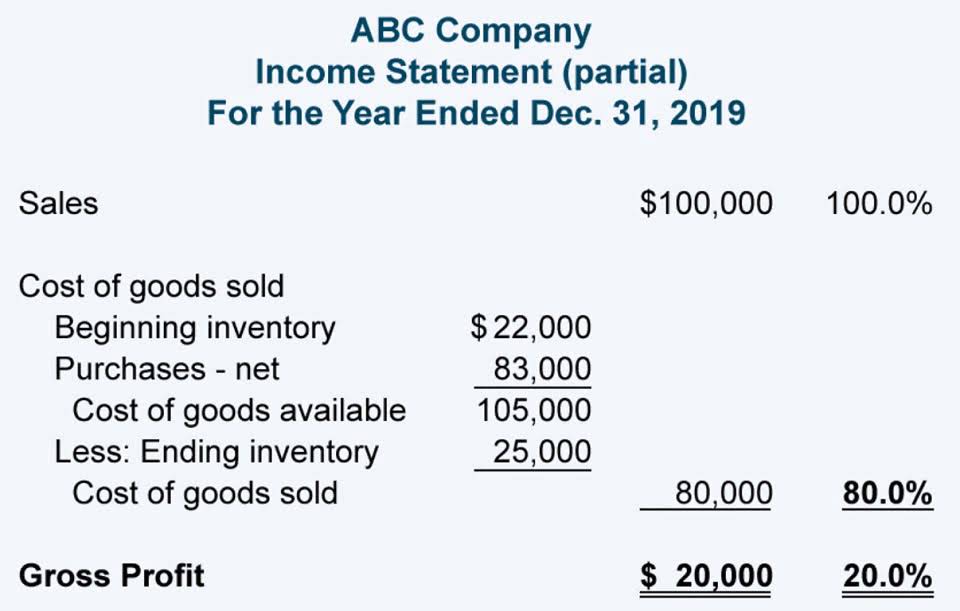
Thus, if the company had a market value of $2 million before the stock dividend declaration, it’s market value still is $2 million after the stock dividend is declared. This is because due to the increase https://www.bookstime.com/ in the number of shares, dilution of the shareholding takes place, which reduces the book value per share. And this reduction in book value per share reduces the market price of the share accordingly.
Calculating Retained Earnings
- The net income is obtained from the company’s income statement, which is prepared first before the statement of retained earnings.
- Again, this is because they use the majority of their retained earnings to finance expansion rather than dividends.
- Retained earnings are the cash left after paying the dividends from the net income.
- This profit can be carried into future periods in an accounting balance called retained earnings.
- The level of retained earnings can guide businesses in making important investment decisions.
- The dotted red box in the shareholders’ equity section on the balance sheet is where the retained earnings line item is recorded.
- Accordingly, Sage does not provide advice per the information included.
Observing it over a period of time (for example, over five years) only indicates the trend of how much money a company is adding to retained earnings. It involves paying out a nominal amount of dividends and retaining a good portion of the earnings, which offers a win-win. If an investor is looking at December’s financial reporting, they’re only seeing December’s net income. But retained earnings provides a longer view of how your business has earned, saved, and invested since day one.

What Is the Difference Between Retained Earnings and Dividends?
In that case, the company may choose not to issue it as a separate form, but simply add it to the balance sheet. It’s also sometimes called the statement of shareholders’ equity or the statement of owner’s equity, depending on the business structure. The key financial statements include the balance sheet, income statement (also known as an earnings statement), and cash flow statement. These documents allow business owners to make informed decisions regarding operations, investment, and potential expansion. Dividends paid are the cash and stock dividends paid to the stockholders of your company during an accounting period. Where cash dividends are paid out in cash on a per-share basis, stock dividends are dividends given in the form of additional shares as fractions per existing shares.
- This can make a business more appealing to investors who are seeking long-term value and a return on their investment.
- Your retained earnings account on January 1, 2020 will read $0, because you have no earnings to retain.
- We can find the dividends paid to shareholders in the financing section of the company’s statement of cash flows.
- The figure is calculated at the end of each accounting period (monthly/quarterly/annually).
- If a company decides not to pay dividends, and instead keeps all of its profits for internal use, then the retained earnings balance increases by the full amount of net income, also called net profit.
Step 4: Subtract Dividends Paid Out to Investors
Before diving into the calculation of retained earnings, it’s crucial to grasp certain fundamental concepts that play a significant role in this process. This section provides a foundation for understanding key terms and principles related retained earnings on balance sheet to retained earnings. The company may use the retained earnings to fund an expansion of its operations. The funds may go into building a new plant, upgrading the current infrastructure, or hiring more staff to support the expansion.

Retained earnings are reported in the shareholders’ equity section of a balance sheet. Retained earnings act as a reservoir of internal financing you can use to fund growth initiatives, finance capital expenditures, repay debts, or hire new staff. The balance sheet is also known as the statement of financial position.
Retained Earnings Calculation Example
The calculated retained earnings represent the net amount of your business’s profits that have been reinvested or held back for future use. A positive retained earnings figure indicates that the business has accumulated profits over time, signifying healthy business performance. On the contrary, negative retained earnings may signify accumulated losses over time, which could be a sign of concern. Whenever a company generates surplus income, a portion of the long-term shareholders may expect some regular income in the form of dividends as a reward for putting their money in the company. Traders who look for short-term gains may also prefer getting dividend payments that offer instant gains. Dividends are paid out from profits, and so reduce retained earnings for the company.
Statement of retained earnings example
- We can find the net income for the period at the end of the company’s income statement (consolidated statements of income).
- Retained earnings are considered an important concept concerning a company’s financial statements.
- If the company has been operating for a handful of years, an accumulated deficit could signal a need for financial assistance.
- Note that accumulation can lead to more severe consequences in the future.